The Grand Tour: How Young Travellers Explored Europe in the 1700s
Introduction
In the 1700s, a young man from a wealthy family in Britain did not finish his education at school. He finished it on the road. After years of study at home, he set off on a journey called the Grand Tour, a long trip through France and Italy that could last months or even years. He went to see the art of Rome, the ruins of the ancient world, and the cities of Italy, and he came home changed. This article follows the Grand Tour from start to finish, along the route its travellers took, and shows how it shaped the way we still travel today.
What the Grand Tour was
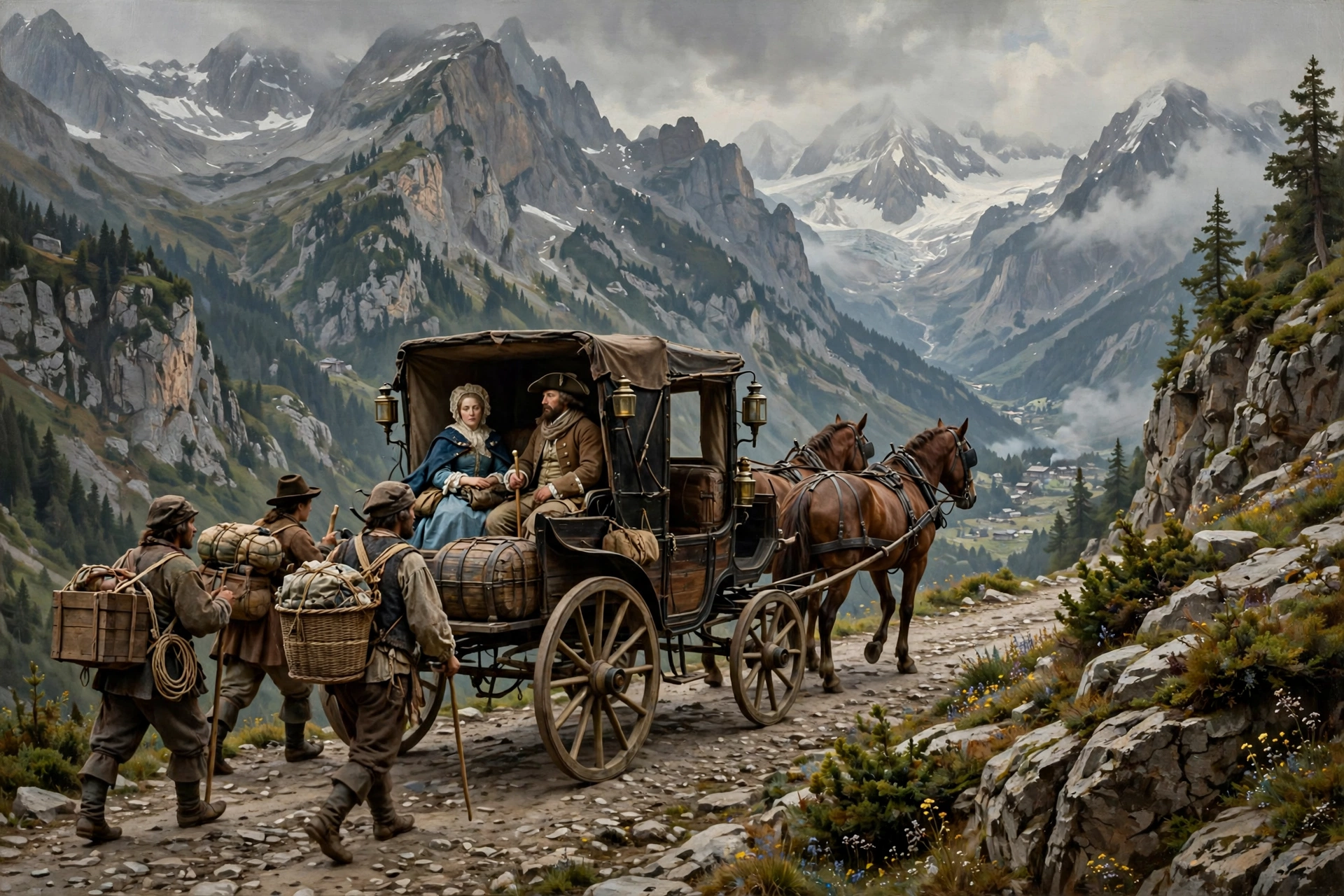
The Grand Tour was a journey of education. It was taken mostly by young men from wealthy families in Britain, but also from Germany, the Netherlands and Scandinavia. They were usually in their late teens or early twenties, and they travelled with a tutor, who taught them, looked after the money, and wrote reports home to their parents. The purpose was to learn. Travellers studied painting, sculpture and architecture, learned French and Italian, met artists and writers, and saw the great works of the ancient world with their own eyes. A young man who had done the Grand Tour was thought to be ready for a life in politics, the law or the church. The journey was also a way to make connections, because the same families met each other again and again on the road.
The route: from London to Paris
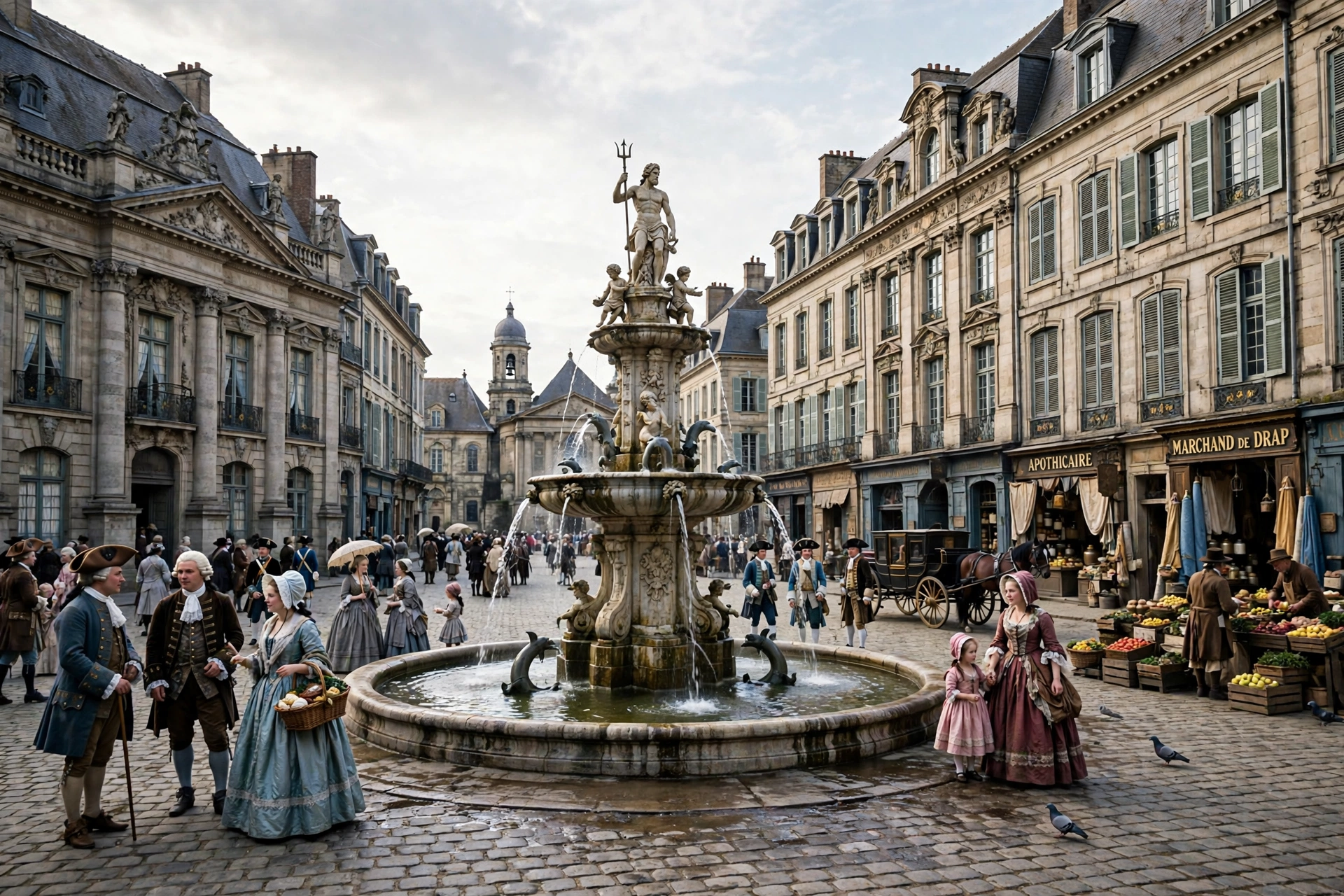
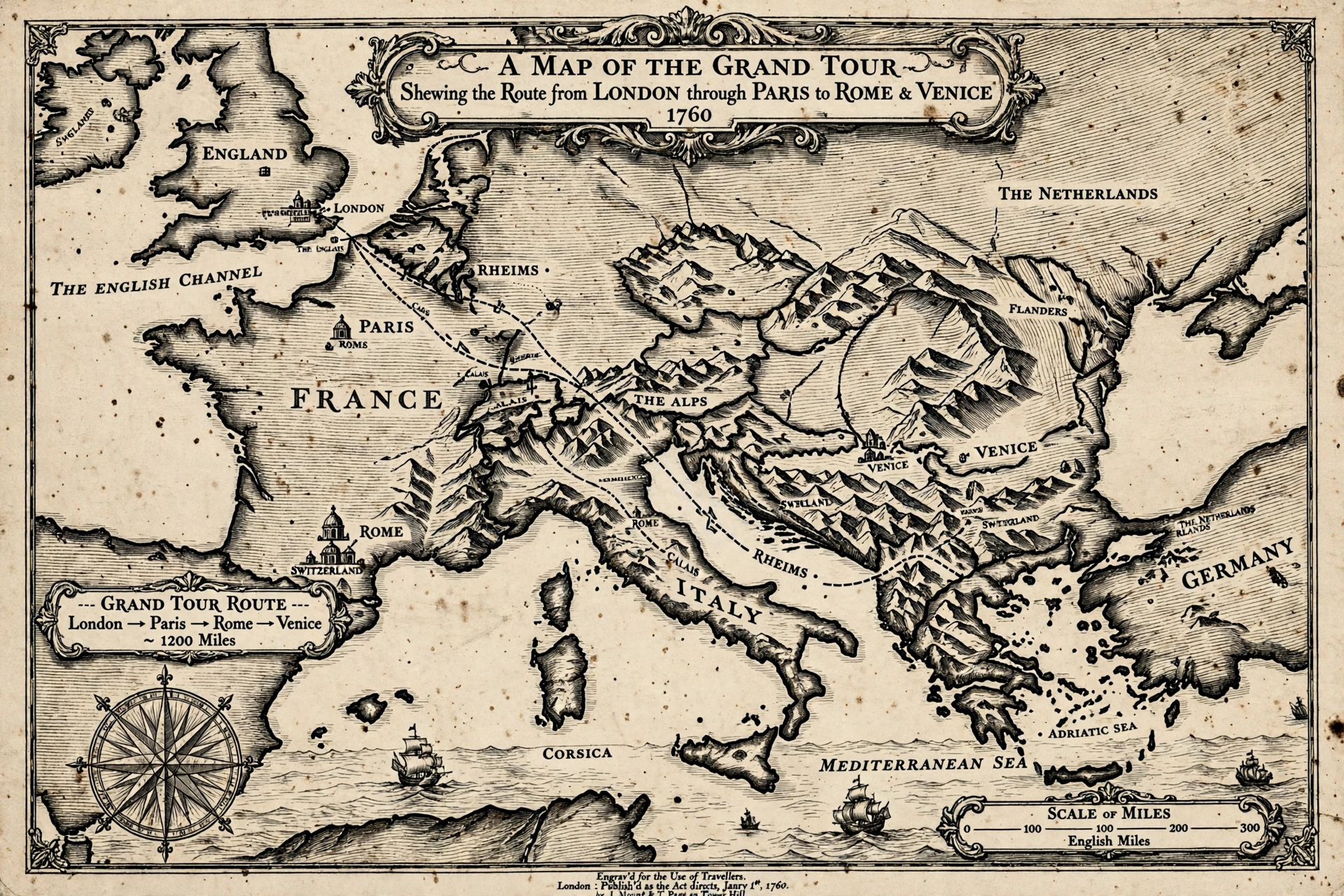
The tour usually began in London. Travellers crossed the Channel by boat to Calais, then travelled overland to Paris. The crossing could be rough, and the roads were slow, but Paris was worth the trouble. It was the centre of art and fashion in Europe, and travellers stayed there for weeks or months, learning French, visiting museums and theatres, and buying clothes. From Paris, the route went south through France, often through Lyon and over the Alps into Italy. The crossing of the Alps was one of the great moments of the tour. Travellers went over the Mont Cenis pass, sometimes carried in chairs by local porters, and wrote about the mountains with a mixture of fear and wonder. The Alps taught them to see wild landscape as beautiful, not only as dangerous, and that idea changed European art.
Italy: Turin, Florence and Rome
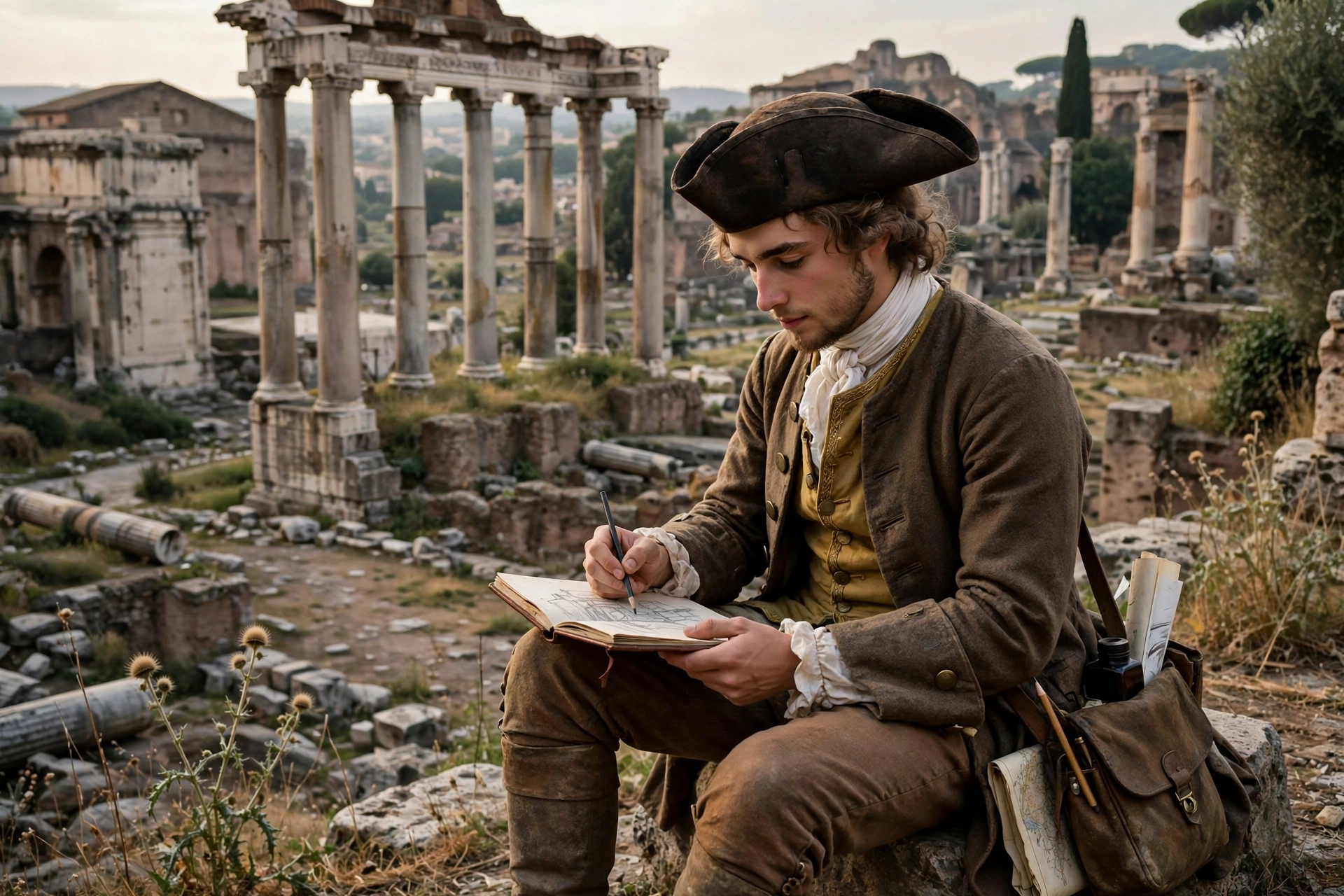
Once in Italy, travellers usually went first to Turin, then to Florence. Florence was a city of art, full of paintings and sculptures from the Renaissance. Travellers spent weeks there, copying paintings, buying prints, and visiting the Uffizi gallery. They learned to tell a good painting from a bad one, and they bought art to take home, which is how so many Italian paintings ended up in British country houses. Then came Rome, the goal of the whole journey. Travellers stayed in Rome for months. They walked the Forum, visited the Colosseum, studied the ruins and the churches, and met the artists who worked there. Rome was a school in itself. A traveller who had seen Rome had seen the ancient world, and his letters home were full of what he had learned. Many travellers had their portraits painted in Rome, dressed as grand tourists, and those portraits still hang in houses across Britain today.
Naples and the south
Some travellers went further south to Naples, to see the Bay of Naples and the newly discovered ruins of Pompeii and Herculaneum. These cities had been buried by the eruption of Vesuvius in 79 AD, and they were being dug up in the 1700s. Travellers walked through streets that had been buried for seventeen hundred years, and the experience changed how Europe thought about the ancient world. It was no longer only books and statues. It was real houses, real shops and real people.
The journey home and what it changed
The return journey usually went through Venice, where travellers saw the canals and the carnival, and then over the Alps again and back to London. The whole tour could take one, two or even three years, and it cost a great deal of money. But the travellers who came home brought more than souvenirs. They brought a taste for Italian art, a love of classical architecture, and the idea that travel itself was an education. The Grand Tour changed travel. It made the journey as important as the destination, and it taught travellers to look, to learn and to write about what they saw. The guidebooks, the travel writing and the idea of the holiday all grow out of this journey. When we travel to Italy today, to see Rome, Florence and Venice, we are still following the route of the Grand Tour.
How to follow the Grand Tour today
You can still follow the route. Start in Paris, take the train south through Lyon, cross the Alps, and visit Turin, Florence, Rome, Naples and Venice. You will travel faster than the grand tourists did, but the cities, the art and the ruins are the same. In Rome, walk the Forum as they did. In Florence, visit the Uffizi as they did. In Naples, visit Pompeii as they did. The journey is shorter now, but the education is the same.
Conclusion
The Grand Tour was more than a holiday. It was a school on the road, a journey that taught young travellers how to see art, how to understand history, and how to be at home in the world. Its route through France and Italy is still the classic journey of Europe, and its travellers were the first tourists. When you plan your next trip to Europe, think about the Grand Tour. The road is still there, and it still teaches.
Frequently asked questions
Q: How long did the Grand Tour take? A: Usually one to three years. Travellers spent months in Paris, Florence and Rome, and travelled slowly by carriage and boat, so the journey was long by modern standards.
Q: Who went on the Grand Tour? A: Mostly young men from wealthy families in Britain, Germany, the Netherlands and Scandinavia, usually with a tutor. Women from wealthy families also travelled, though less often and usually with family.
Q: Can I follow the Grand Tour route today? A: Yes. The classic route runs from London and Paris through Lyon, over the Alps to Turin, Florence, Rome, Naples and Venice, and all of these cities are easy to reach by train today.