Five Historic Journeys and the Routes They Followed, From Start to Finish
Some journeys changed the world. They were not holidays. They were long, dangerous trips that took years, crossed deserts and oceans, and brought back knowledge that changed how people saw the earth. The travellers who made them wrote about what they saw, and their books were read for hundreds of years after they came home. This article follows five of those journeys, from start to finish. For each one, you will see where it began, which route it followed, how long it took, and what it changed. Together, they show how travel built the first real picture of the world.
1. Marco Polo and the road to China, 1271 to 1295
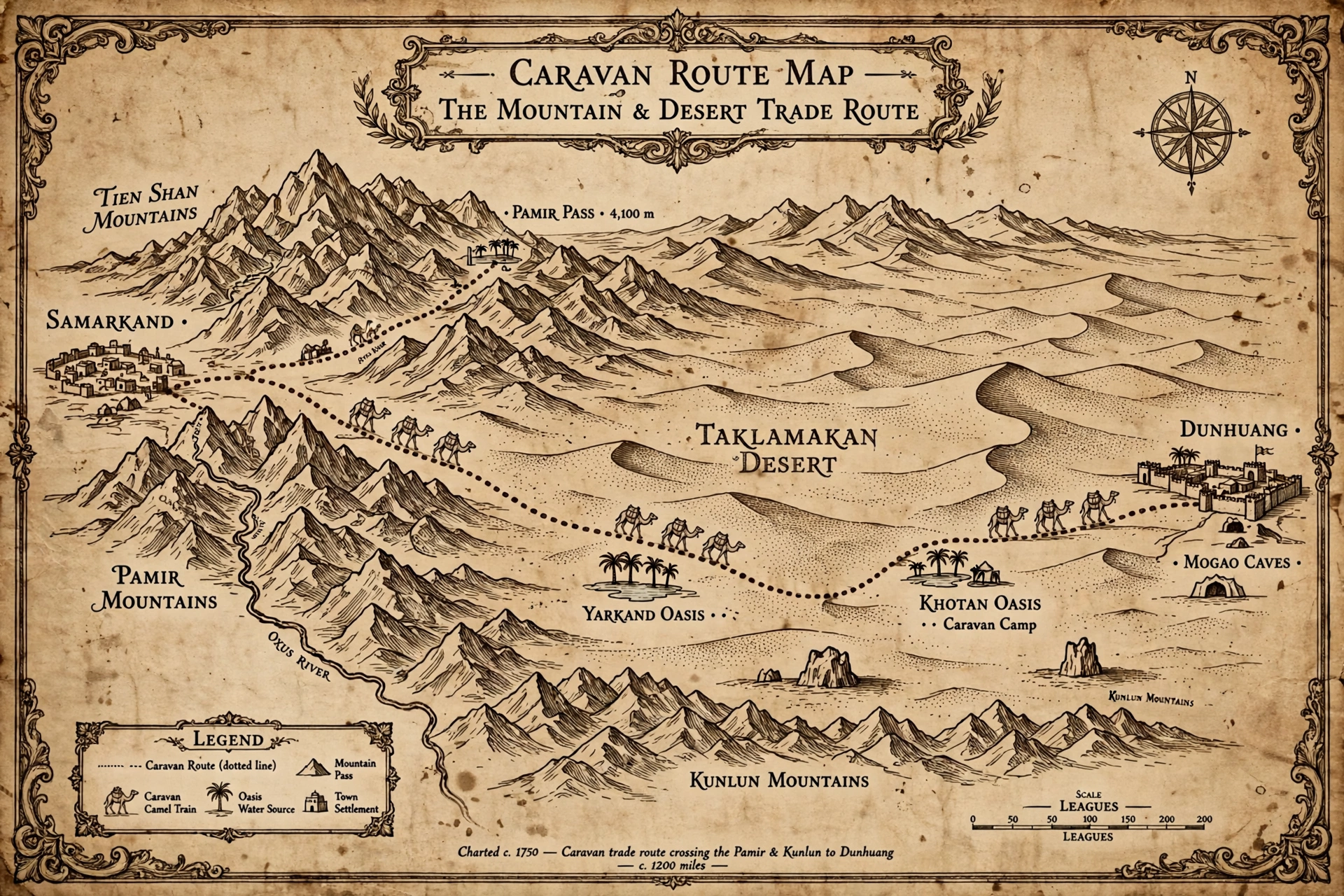
Marco Polo was a young merchant from Venice when he left home in 1271 with his father and uncle. They travelled east along the Silk Road, through Persia and Central Asia, across the Pamir mountains, and through the deserts of western China. The journey to the court of Kublai Khan took about three and a half years. Polo stayed in China for about seventeen years, serving the Khan and travelling around the country. He saw paper money, coal, cities with millions of people, and a postal system that surprised him. When he finally returned to Venice in 1295, the journey home took another three years, by sea from China to Persia and then overland. His book, often called The Travels of Marco Polo, was read across Europe. Many readers did not believe him, but his descriptions of China, India and the islands of the East stayed in people’s minds. Later explorers, including Columbus, read his book and dreamed of reaching the East by sea.
2. Ibn Battuta and twenty four years of travel, 1325 to 1349
Ibn Battuta was a scholar from Tangier, in present day Morocco. In 1325, at the age of twenty one, he set out on the pilgrimage to Mecca. He did not come home for twenty four years. His route took him across North Africa, through Egypt and Syria to Mecca, then to Persia, East Africa, India, Central Asia, China and back through West Africa. In total, he travelled about 120,000 kilometres, far more than Marco Polo. He worked as a judge in India, visited the court of the Sultan of Delhi, and sailed with traders across the Indian Ocean. His book, the Rihla, is one of the best sources we have for the world of the fourteenth century. He described the markets of Cairo, the mosques of Mecca, the ports of India and the gold trade of Mali. Wherever he went, he found Muslim scholars, traders and rulers, and his journey shows how connected the Islamic world already was.
3. Zheng He and the treasure fleets of China, 1405 to 1433
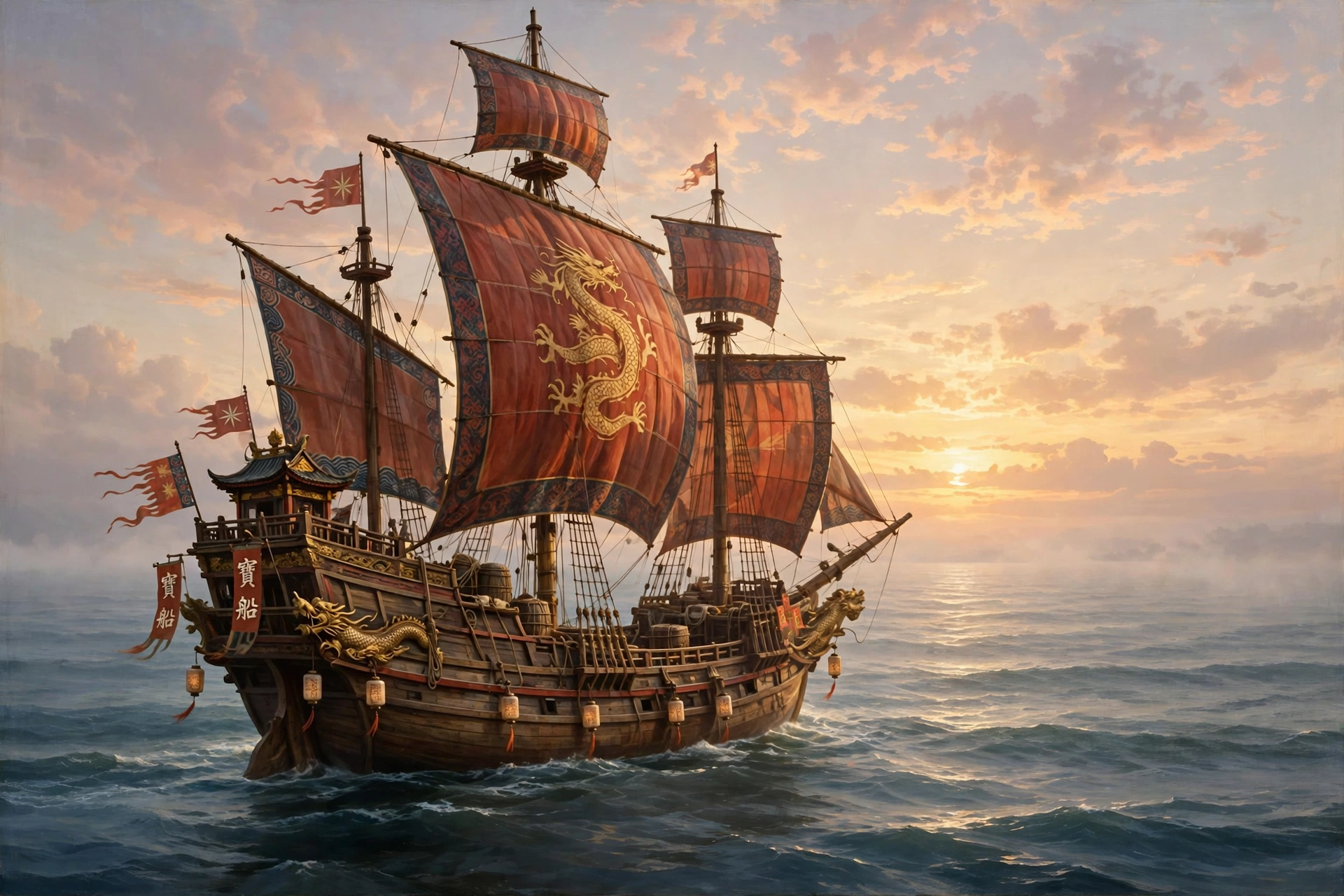
Zheng He was a Chinese admiral who led seven great voyages from China between 1405 and 1433. His fleets were enormous. The largest ships were far bigger than anything in Europe at the time, and each voyage carried tens of thousands of men. The route ran from Nanjing, down the coast of China, through Southeast Asia, across the Indian Ocean to India, Arabia and the east coast of Africa. Zheng He visited Calicut in India, Hormuz in Persia, Aden in Arabia and Malindi in Africa. He brought back giraffes, spices, gems and news of faraway lands, and he carried Chinese silk, porcelain and gifts to the rulers he met. The voyages showed Chinese power and opened trade across the Indian Ocean. After 1433, China stopped sending such fleets, and the voyages were largely forgotten in China itself. In the ports he visited, though, his visits were remembered for centuries.
4. Mansa Musa and the pilgrimage that shook Cairo, 1324 to 1325
Mansa Musa was the ruler of the Mali Empire in West Africa, one of the richest kingdoms in the world because it controlled the gold trade. In 1324 he set out on the pilgrimage to Mecca, and his journey became legendary. His route ran from Mali, across the Sahara, through Cairo and on to Mecca. He travelled with a huge caravan, including thousands of soldiers, servants and camels loaded with gold. In Cairo, he gave away so much gold that he changed the price of gold in Egypt for years. People in Cairo and Mecca had never seen such wealth, and his visit put Mali on the maps of Europe. The journey was not only about gold. Mansa Musa brought back scholars and architects, and he built mosques and schools in Timbuktu and Gao. His pilgrimage turned Timbuktu into a centre of learning, and its libraries and mosques still stand today.
5. Lewis and Clark and the crossing of North America, 1804 to 1806
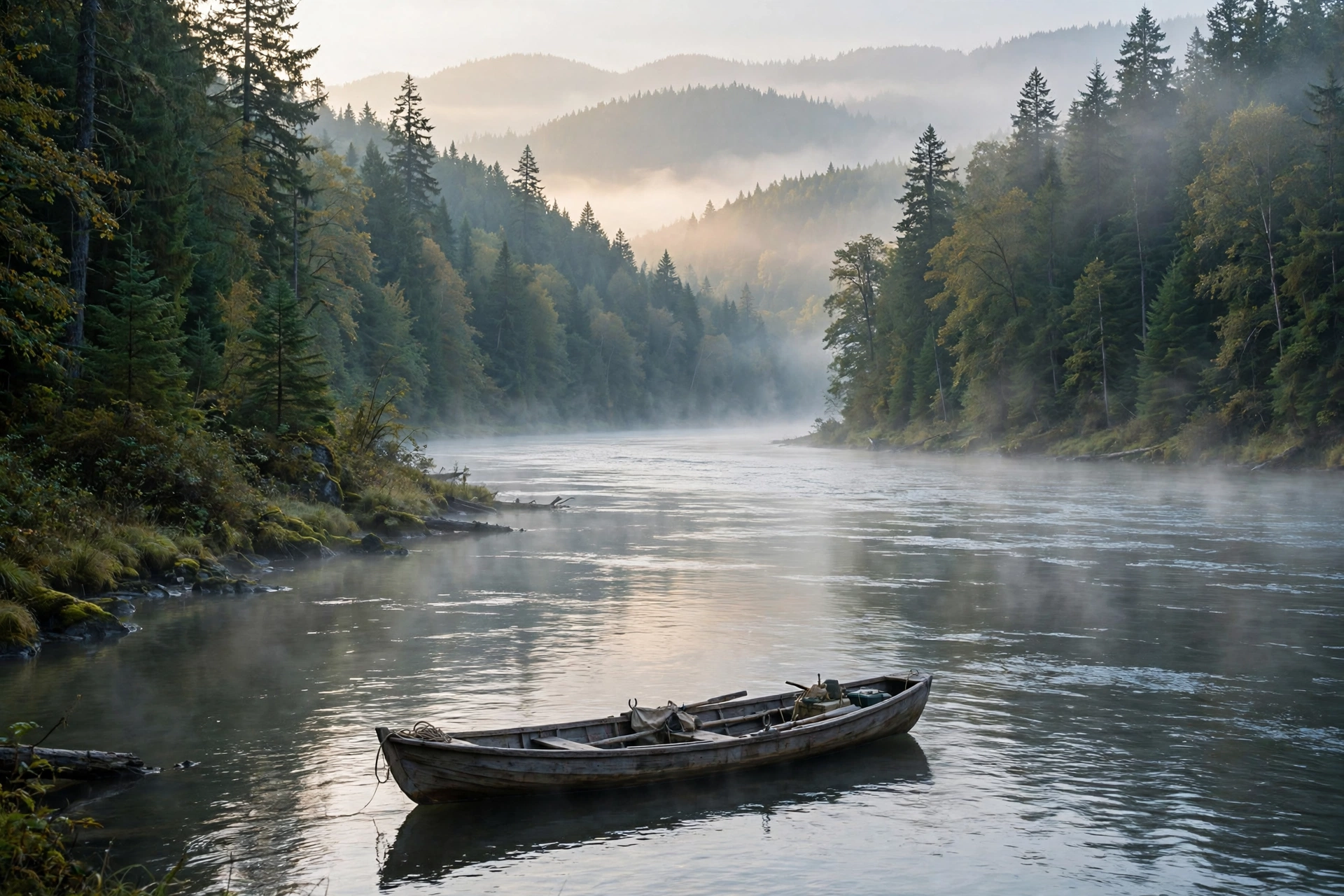
Lewis and Clark led a very different kind of journey. In 1804, the United States had just bought a huge territory in the west, and President Jefferson wanted to know what was there. Meriwether Lewis and William Clark were asked to find a route to the Pacific Ocean and to report on the land, the rivers and the peoples they met. Their route began in St Louis, followed the Missouri River west, crossed the Rocky Mountains, and followed the Columbia River to the Pacific coast. The journey took more than two years. They travelled by boat, on foot and on horseback, and they depended on the help of Native American peoples, above all Sacagawea, who guided them and helped them trade for food and horses. They reached the Pacific in November 1805 and returned to St Louis in September 1806. Their journals mapped the rivers and mountains of the west for the first time, and their journey opened the way for the traders and settlers who followed. Today, the Lewis and Clark Trail follows their route across the United States.
What these journeys have in common
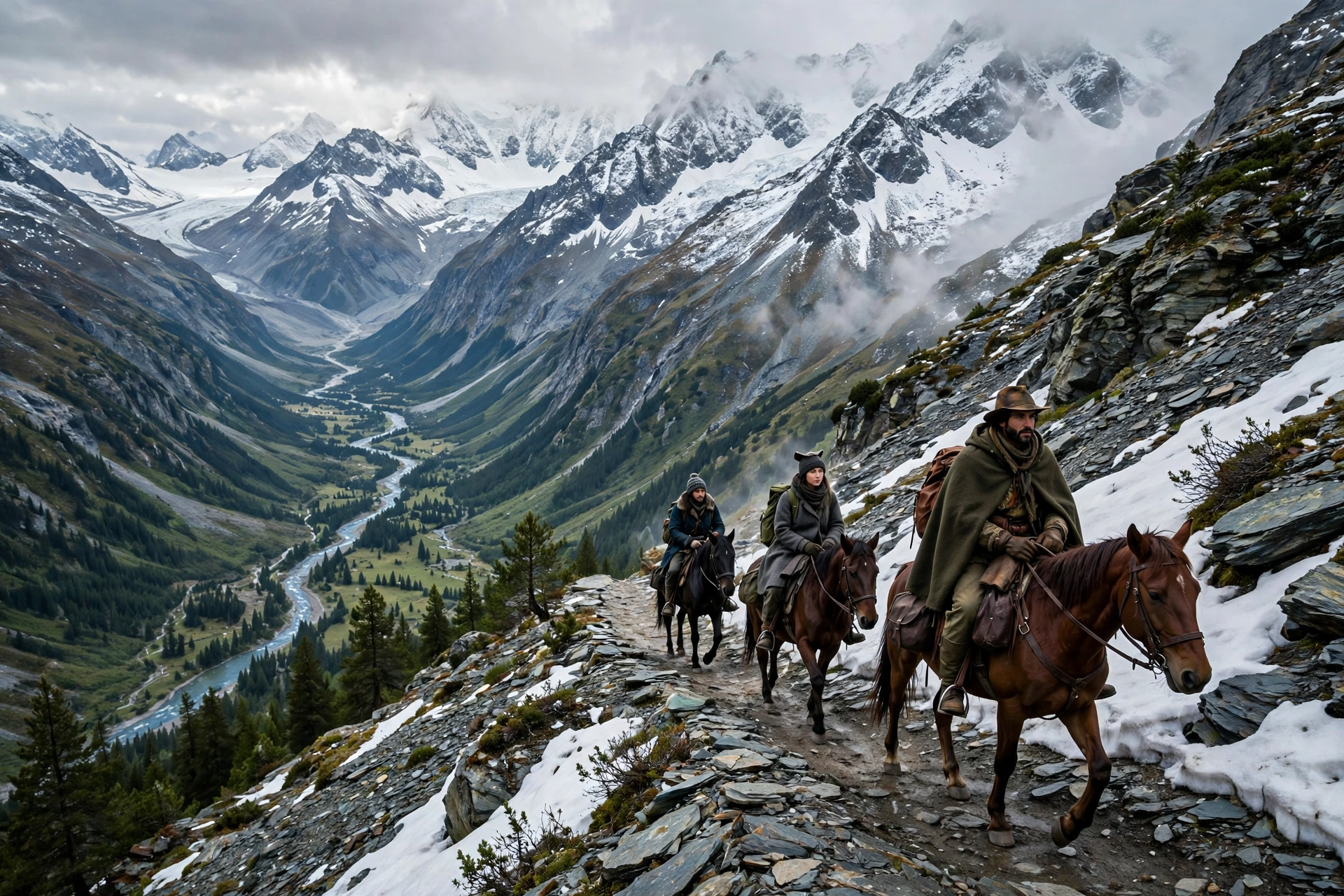
These five journeys look very different, but they share a pattern. Each one followed a route that already existed, whether it was a caravan road, a sea lane or a river. Each one depended on local guides, traders and hosts. And each one brought back knowledge that changed the home country. They also show that travel was slow and hard. Marco Polo took twenty four years to go to China and back. Ibn Battuta was away for twenty four years. Lewis and Clark took more than two years to cross one continent. The travellers who made these journeys accepted years of danger and discomfort, and their patience is part of why we still remember them.
How to follow these routes today
You can still follow parts of all five routes. The Silk Road cities of Uzbekistan, the old ports of India and East Africa, the cities of Mali and the Lewis and Clark Trail in the United States are all open to travellers. You will travel faster than they did, but the places, the landscapes and the old towns are still there. Pick one journey and one part of its route. Read the traveller’s own account, or a good modern book about it, before you go. Then visit two or three places on that route and look for what the traveller saw. A market, a river, a mountain pass or an old mosque will mean more when you know who passed through it before you.
Conclusion
Marco Polo, Ibn Battuta, Zheng He, Mansa Musa and Lewis and Clark did not travel for fun. They travelled to trade, to pray, to serve a ruler or to map a new land. But their journeys did something larger. They connected distant peoples, they filled in the maps, and they left stories that travellers still follow today. When you plan your next trip, think about the route, not only the destination. The great journeys of history were great because of the road itself, and the road is still there to follow.
Frequently asked questions
Q: Which historic journey was the longest?
A: Ibn Battuta travelled the furthest, about 120,000 kilometres over twenty four years, across Africa, the Middle East, India, Central Asia and China.
Q: Can I follow the Silk Road today?
A: Yes. The classic Silk Road cities in Uzbekistan, including Samarkand, Bukhara and Khiva, are open to travellers, and the route through Central Asia is a popular journey.
Q: Why did Zheng He stop sailing after 1433?
A: China changed its policy and stopped funding the great voyages. The reasons are still debated, but the fleets were expensive, and the court turned its attention to problems at home.